

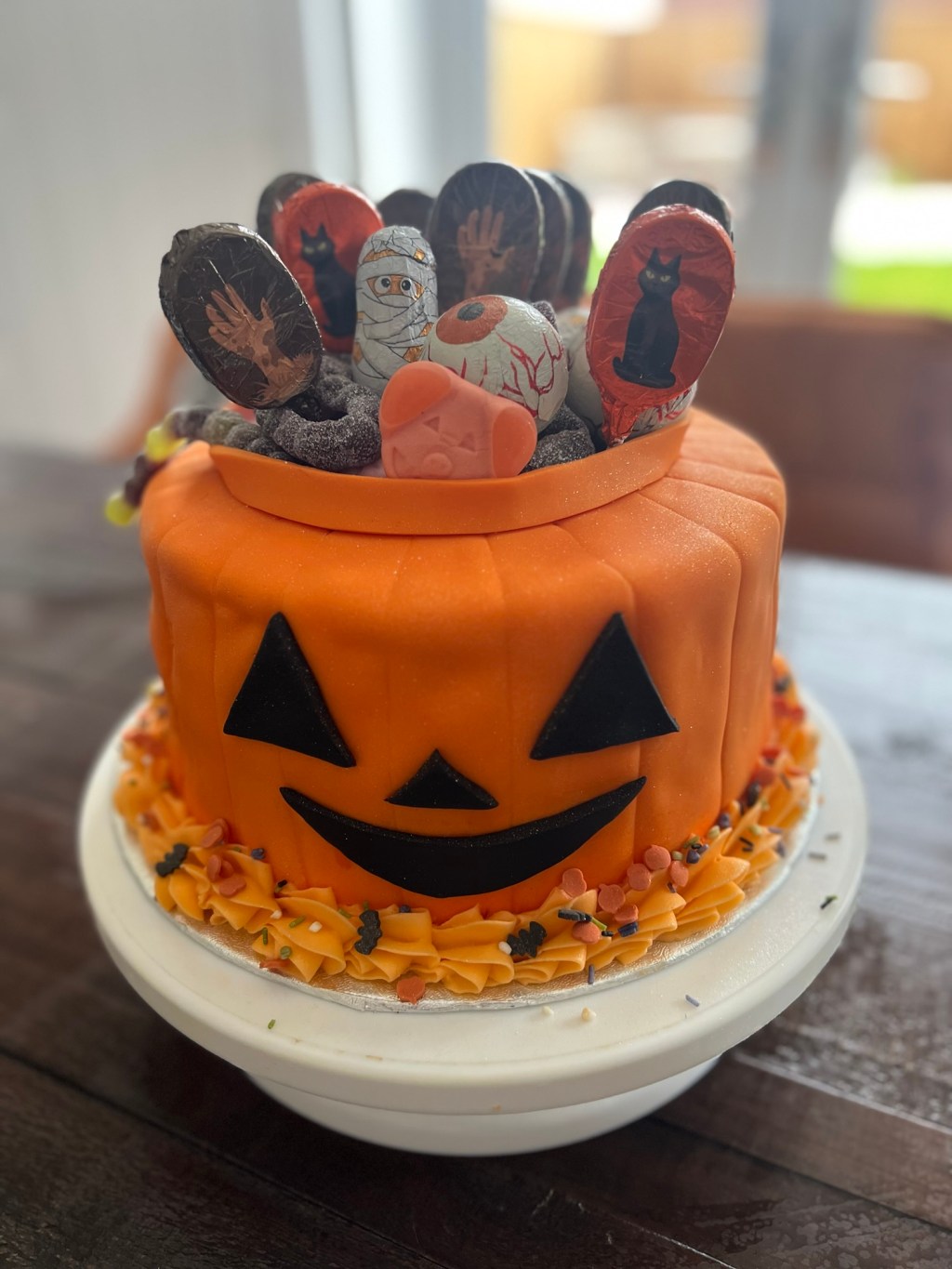
Don’t be fooled, I wanted a 3D pumpkin cake (fully sphere) but with the absence of time compromised for a more squar-cle kind of shape… and that’s fine!
Underneath the orange and black fondant and mountain of sweets, was 3 layers of gooey chocolate cake with a salted caramel filling and a chocolate ganache.
Now I haven’t had too much experience icing large cakes with fondant, probably due to the cost it takes to practice.
However, from my limited tries I have been learning from my mistakes:
Tips for smooth, sharp fondant:
1. Prepare the Cake Base
- Use ganache or buttercream: A firm, smooth layer underneath is essential. Ganache is often preferred because it sets harder, giving fondant a crisp edge.
- Chill the cake: Refrigerate after crumb-coating so the surface is firm and won’t shift when fondant is applied.
2. Roll Fondant Correctly
- Thickness matters: Roll fondant to about 3–4 mm. Too thin → tears; too thick → bulky edges.
- Even rolling: Use spacers or guides to keep the fondant uniform.
- Dust surface lightly: Use cornstarch or powdered sugar to prevent sticking, but avoid excess (it can dry fondant out).
3. Apply Without Bubbles
- Lift and drape carefully: Place fondant over the cake smoothly, starting from the center.
- Work downwards: Smooth sides gradually, pressing out air pockets as you go.
- Pop bubbles immediately: Use a sterilized pin to prick tiny air bubbles, then smooth over with your hand or a fondant smoother.
4. Sharpen the Edges
- Double smoother technique: Hold one smoother on the side and another on top, working them together to pinch the fondant into a sharp edge.
- Upside-down method: Some decorators flip the cake upside down after covering, letting gravity help sharpen edges before trimming excess fondant.
- Acetate strips: Flexible plastic strips can be used to press fondant tightly against edges for a crisp finish.
5. Avoid Common Mistakes
- Don’t overwork fondant: Kneading too much dries it out, leading to cracks.
- Rest fondant before rolling: Let it sit for a few minutes after kneading so it’s pliable but not sticky.
- Temperature control: Warm kitchens make fondant sticky; cool, dry environments are best.
Pro-Level Tricks
- Steam for shine: A quick pass with a handheld steamer removes excess cornstarch and gives fondant a professional sheen.
- Use high-quality fondant: Brands differ—some are more elastic and forgiving, reducing bubbles and cracks.
- Practice on dummy cakes: Styrofoam cake dummies are great for practicing sharp edges without wasting ingredients.
In short: A flawless fondant cake is all about preparation, technique, and patience. Smooth the base, roll evenly, apply carefully, and sharpen with the right tools. Once you master these steps, your cakes will look bakery-perfect every time.
 Rachael's Buns
Leave a comment